There’s a quiet kind of magic in the way life unfolds – not always as we plan, but often as we need.
I had imagined our trip to Alicante — just the four of us: my husband, our daughter, our son, and me — as a radiant escape from the gray Lithuanian winter. We pictured sun-drenched mornings, winding coastal roads, the thrill of discovering new corners of the world. I had carefully mapped out our route: from the vibrant streets of Alicante to the rugged cliffs of Gibraltar, back through the breathtaking views of Ronda and the dramatic Caminito del Rey. An itinerary crafted to capture the best of southern Spain.
But life, as it often does, had its own itinerary.
As I zipped up our suitcases, a familiar whisper of worry crept in: I just hope we don't get sick. And if we do, please, not a stomach bug. It was February — prime season for all kinds of viruses — and that quiet fear lingered like a skeleton stowed away in my luggage.
And then, our fears came true.
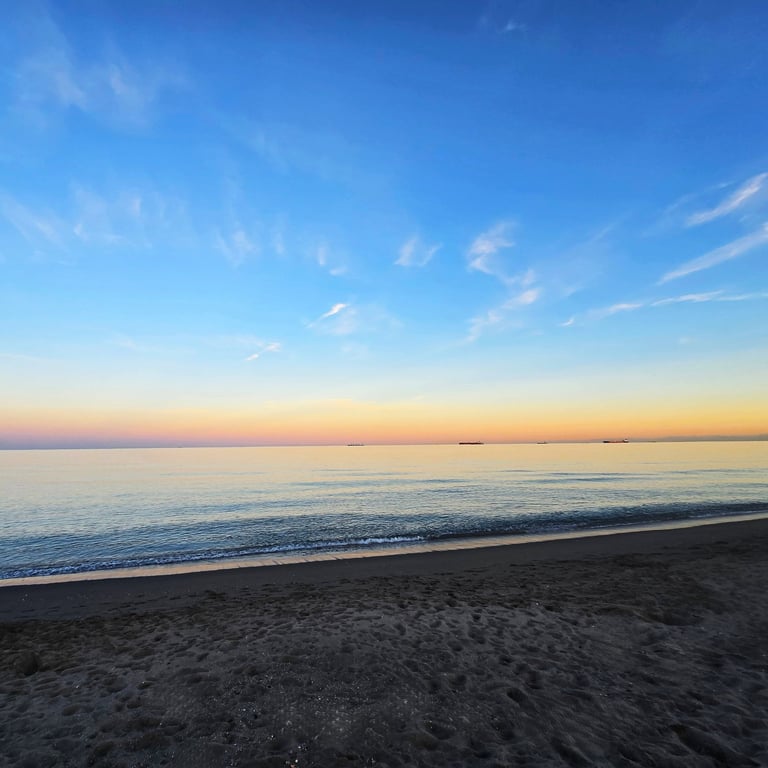
There's a subtle pressure that clings to travel — the voice of itinerary fever, that inner urge to see it all, do it all, make it count, or risk wasting the trip. It's the voice that makes you photograph the meal before you taste it, rush the viewpoint to reach the next one, return home more exhausted than when you left. The pressure to fill every hour can quietly hollow out the very thing you came searching for.
This time, life refused to let me obey that voice.
Acceptance didn't arrive as a sudden wave of peace. It began more desperately than that — a reaching for something to hold onto. I kept returning to something I'd read once: that a situation doesn't have to be good or bad. It can simply be. And you can simply be in it.
At first, the words were just a tool to quiet the noise — a string of syllables I pressed against the anxiety the way you press a cold cloth to a headache. But as the days passed, something shifted. The phrase began to take root not just in my mind, but in my body. I noticed my shoulders drop. The low-grade grief of the missed itinerary slowly unwound.
We weren't so sick that we couldn't move. We simply moved more slowly, with less rushing and fewer things on the list. And in that slowness, something unexpected opened up.
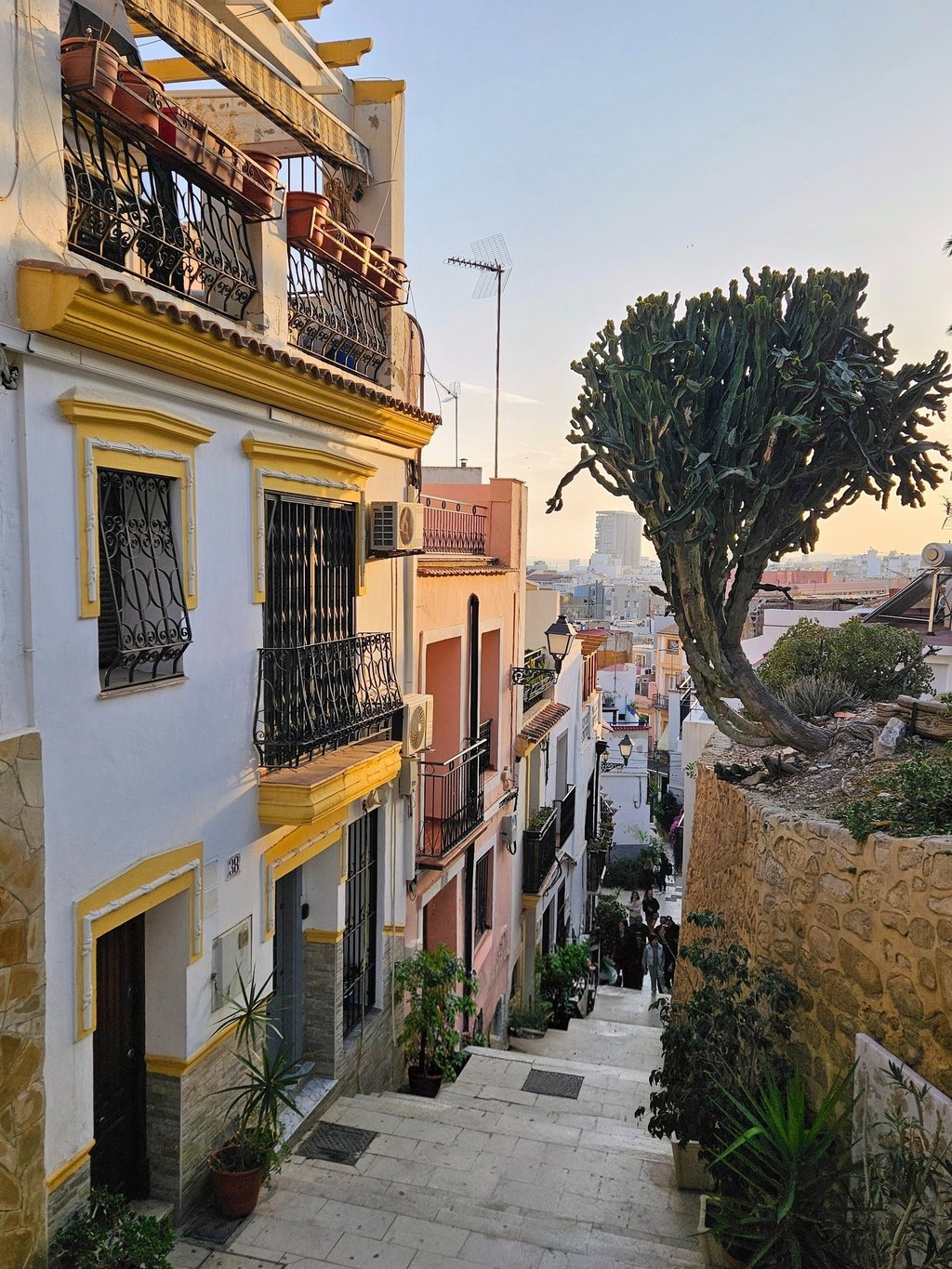
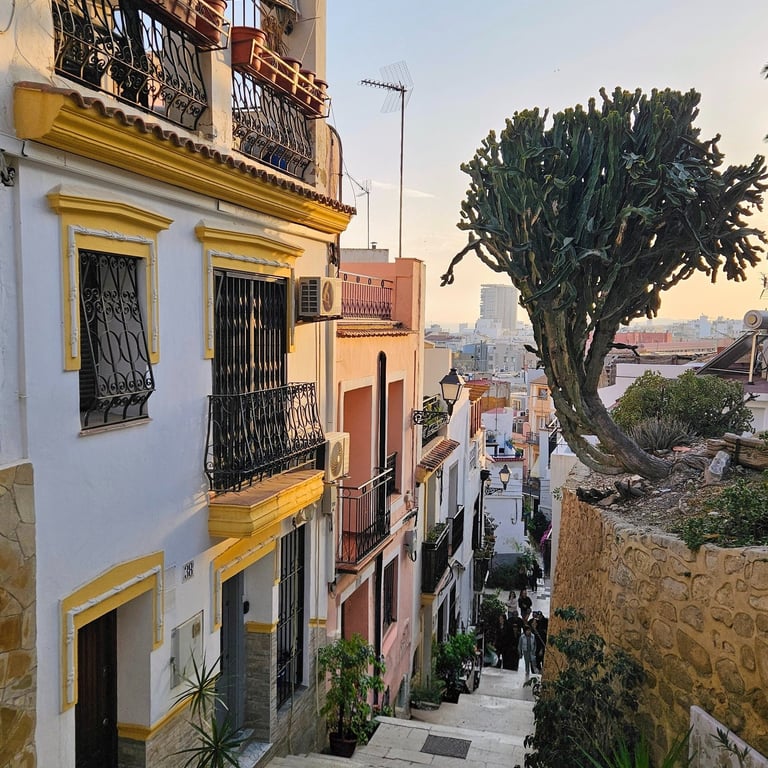
One by one, we fell ill. The world shrank to the four walls of our rented apartment. I remember the afternoon I stood at the window — evening light going warm and golden across the rooftops below — watching that stairway street we had walked on our first day, the one with the yellow-trimmed facades and the dragon tree spreading its strange arms over everything. Somewhere down those steps, the city was still happening: voices, footsteps, the unhurried rhythm of people with nowhere urgent to be. Life, ordinary and luminous, carrying on without us. There was a sharp pang in it: all those carefully planned photographs, those imagined moments — the place where two seas meet off Gibraltar's tip, the ochre walls of Ronda at dusk — slipping quietly out of reach. I pressed my palm against the cool glass and just stood there. Watching.
Faced with that, I realized I had a choice: despair or acceptance.
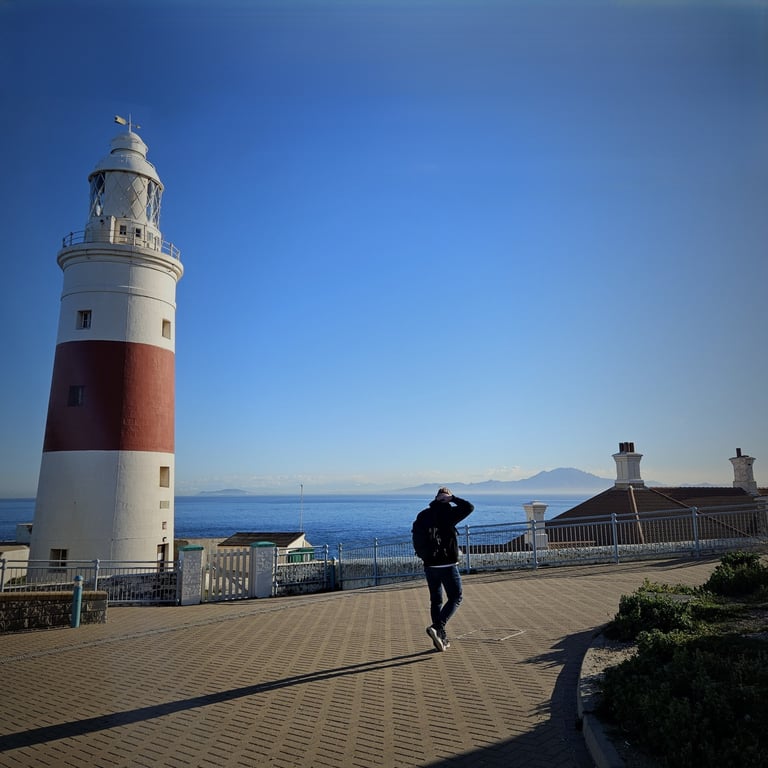
We began to notice what was already there.
We stopped judging the day by miles covered and started observing it for what it was. We gave more attention to one another. To our feelings. To small comforts: a warm drink, afternoon light, the particular silence of a family resting together. These weren't the moments I would have photographed in the version of the trip I'd planned. But they were real, and they were ours.
The detours stopped feeling like disruptions. They began to feel like the trip itself.
This too shall pass, and it will unfold as it may. These words became our internal compass — not a surrender, but a trust. Enjoying the process, rather than racing toward a completed checklist, turned out to be its own quiet reward.
I've thought about that trip often since returning to Lithuania. Not the itinerary I lost, but the window I stood at. The pale afternoon light. The woman arranging oranges. The coolness of the glass beneath my palm.
There's a version of travel that measures itself in distances covered and boxes ticked. And then there's another — the kind that finds you exactly where you are and asks you to be there completely. Not performing the journey, but living it.
Getting sick in Spain didn't ruin the trip. It handed me a different one. And the map it gave me — redrawn in slower lines, with more white space — is the one I find myself reaching for now, long after we've come home.